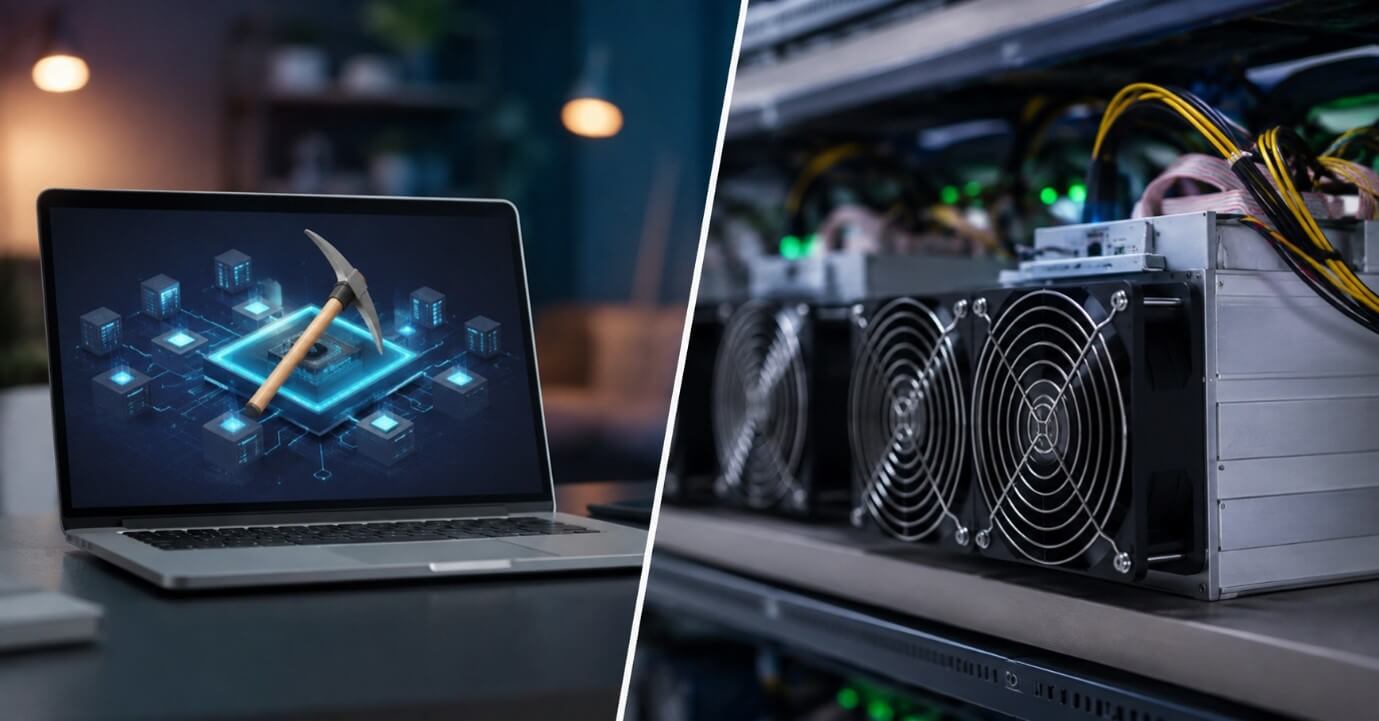
Bitcoin Mining Software vs ASIC Miners: What’s the Difference?
Everyone who decides to mine Bitcoins will sooner or later come across the choice whether to construct a mining rig based on an ASIC or to opt for an alternative method, which includes the use of hosted services using the processing capabilities of remote computers. This is the issue of choosing an ASIC miner vs mining software, where your budget, technical knowledge, and patience play an important role. With this Bitcoin Mining Software vs ASIC Miners guide, we will show you through all of the options.
The following article explains the practicality of both approaches, the real costs, efforts involved, as well as possible pitfalls one might come across before getting into them. Throughout the article, there will be discussed the following aspects: setup, maintenance, power usage, profitability, and scalability, since these are the factors in which the two methods differ the most. Thus, in the end, you should be able to understand which one is more fitting in terms of your budget, hardware comfort, and involvement in mining.
Quick Comparison at a Glance
Here’s a high-level look at how ASIC mining hardware and Cloud mining software compare before we get into the details of each.
| Factor | Cloud Mining | ASIC Hardware |
| Upfront cost | Low to moderate, depending on plan | High, often several thousand dollars per unit |
| Setup | Sign up, choose a plan, connect a wallet | Physical installation, wiring, cooling, configuration |
| Maintenance | Managed by the provider | Owner’s responsibility: cleaning, repairs, part replacement |
| Electricity | Billed within the service, not to your home meter | Drawn directly from your own power supply |
| Control | Limited; you rely on the provider’s infrastructure | Full, you control the hardware and its output |
| Space & noise | None required | Needs dedicated space; hardware runs loud and hot |
| Best suited for | Beginners who want a simpler entry point | Users comfortable with hardware and ongoing upkeep |
How the Hardware Route Works
ASIC mining hardware is a machine designed to do only one thing – to continuously solve the SHA-256 hashing problem in the Bitcoin system. Since it is a dedicated device and not a universal one, it’s one of the more recognizable forms of crypto mining hardware on the market today.
There are trade-offs that come with this kind of efficiency. Such machines give off considerable heat, run all the time, and require cooling or proper airflow for safety. Moreover, they require physical configuration by linking up to power and configuring with information about the mining pools.
How the Software Route Works
Bitcoin mining software works differently, in that it does not require ownership of any physical hardware; rather, it requires access to computing power located somewhere else and available under a subscription arrangement or a service contract. You are then allotted some portion of the mining power, and the bitcoins generated by it are credited to your wallet.
The actual process of mining takes place using hardware, but it’s not located in your house anymore. This is exactly why cloud mining software is attractive to those people who would like to have access to mining without having any hardware.
Cost Differences
The financial commitment is one of the clearest differences between the two paths.
Dedicated mining hardware requires a substantial upfront purchase, and pricing varies by model and hash rate. On top of the unit itself, you’ll typically need a stable power supply, cooling setup, and reliable internet, all of which add to the real cost of getting started.
A hosted mining plan generally has a lower barrier to entry, since you’re paying for access rather than owning equipment outright. Plans are usually tiered, so you can start small and scale up rather than committing a large sum before you know whether mining suits you.
Setup and Day-to-Day Effort
Setting up a mining rig involves unboxing the unit, wiring it correctly, configuring pool and wallet settings, and finding a location where heat and noise won’t be a problem. It’s a hands-on process, and mistakes at this stage can affect performance or safety.
The hosted route simplifies this considerably: create an account, select a plan, connect a wallet, and the service handles the rest. There’s no hardware to install, which is why this option tends to appeal to people without a technical background.
Maintenance
Physical rigs need ongoing attention. Dust accumulates, fans can fail, and components degrade with continuous use, all of which can eat into your returns if left unaddressed. Owning a miner means budgeting time (or money for a technician) for upkeep.
With a hosted plan, maintenance responsibility sits with the provider. That’s a genuine convenience, but it also means your returns depend heavily on how well-run and transparent that provider actually is, something worth researching carefully before signing up.
Electricity Considerations
Electricity is one of the highest ongoing costs in mining. Physical units draw substantial power around the clock, and in areas with high electricity rates, this can significantly cut into profitability, sometimes to the point where mining isn’t worthwhile at all.
A hosted service shifts this cost into the provider’s pricing rather than your home electricity bill, which removes a variable that’s often hard to predict. It doesn’t eliminate the cost of electricity from the equation entirely; it’s simply built into what you’re paying for.
Profitability: Realistic Expectations
Profitability for either option depends on factors outside your control: Bitcoin’s price, network difficulty, and how efficient your hardware or provider’s infrastructure is. Neither route guarantees a return, and past performance in either model says little about future results.
Owning hardware can offer stronger returns when conditions are favorable, but the high upfront cost means a longer break-even period, and returns can shrink as network difficulty rises. A hosted plan tends to involve smaller individual outlays and can start generating returns sooner, but daily yields are typically modest and are subject to the terms of your specific contract.
Because this space includes both legitimate operators and questionable ones, it’s worth treating any mining income as inherently variable rather than guaranteed, and reviewing a provider’s terms, track record, and fee structure before committing funds.
Scalability
Growing a hardware-based operation means buying additional units, finding more physical space, and expanding cooling and power capacity, a process that takes both money and planning.
A hosted plan scales more easily on paper, since increasing your capacity typically just means upgrading a subscription rather than sourcing new hardware. That flexibility is genuinely useful, but it’s still worth confirming exactly what an upgraded plan changes (hash rate, contract length, or fees) before assuming it will proportionally increase returns.
Ease of Use
The hardware route suits people who are comfortable with equipment, don’t mind troubleshooting, and are willing to manage a physical setup long-term.
The hosted route is built for a lower technical bar. Most platforms are designed so a first-time user can get set up without prior experience. That accessibility is a real advantage, but it doesn’t remove the need to understand what you’re signing up for.
Questions Worth Asking Before You Start
Regardless of which path you’re considering, a few questions are worth answering upfront:
- For the hardware route: What’s the real cost of electricity in your area, and how long would it realistically take to break even at current mining difficulty?
- For a hosted plan: Is the provider transparent about fees, contract length, and how payouts are calculated? Do they have a verifiable track record?
- For both: Are you comfortable with the possibility of lower-than-expected returns, given that mining profitability isn’t guaranteed in either model?
Which Option Fits You?
There’s no universally “better” choice in the Bitcoin Mining Software vs ASIC Miners decision, only a better fit for your circumstances. The hardware route suits people with capital to invest, access to affordable electricity, and a willingness to manage physical equipment. The hosted route suits people who want a lower-effort, lower-commitment way to start, provided they choose a transparent, well-reviewed provider.
Microcryptosofts offers cloud mining plans designed for beginners who want a straightforward way to get started without buying or maintaining hardware. As with any mining option, it’s worth reviewing the plan details and understanding how returns are calculated before signing up.
Frequently Asked Questions
1. Is a hosted plan cheaper than buying dedicated hardware?
Ans- Yes, usually. Hosted mining is more affordable due to its lower up-front expense because you do not need to buy any hardware.
2. Do I need technical skills to use Bitcoin mining software?
Ans- No, most mining services have been created in such a way that they can be understood by individuals who lack any kind of technical expertise.
3. Which option offers better long-term profitability?
Ans- It depends on various factors such as the price of electricity, Bitcoin price, and difficulty of the network. Neither of the two choices assures profit, but both have to be considered based on their present conditions.
4. How does electricity usage differ between the two options?
Ans- The dedicated hardware consumes electricity from your home or business premises directly, whereas the hosted solution incorporates the cost of electricity in its pricing model.
5. Can I scale my mining operation easily with a hosted plan?
Ans-Generally, yes, because most hosting services allow you to upgrade your plan without having to purchase new equipment, although it may be a good idea to clarify what upgrading entails.