Introduction
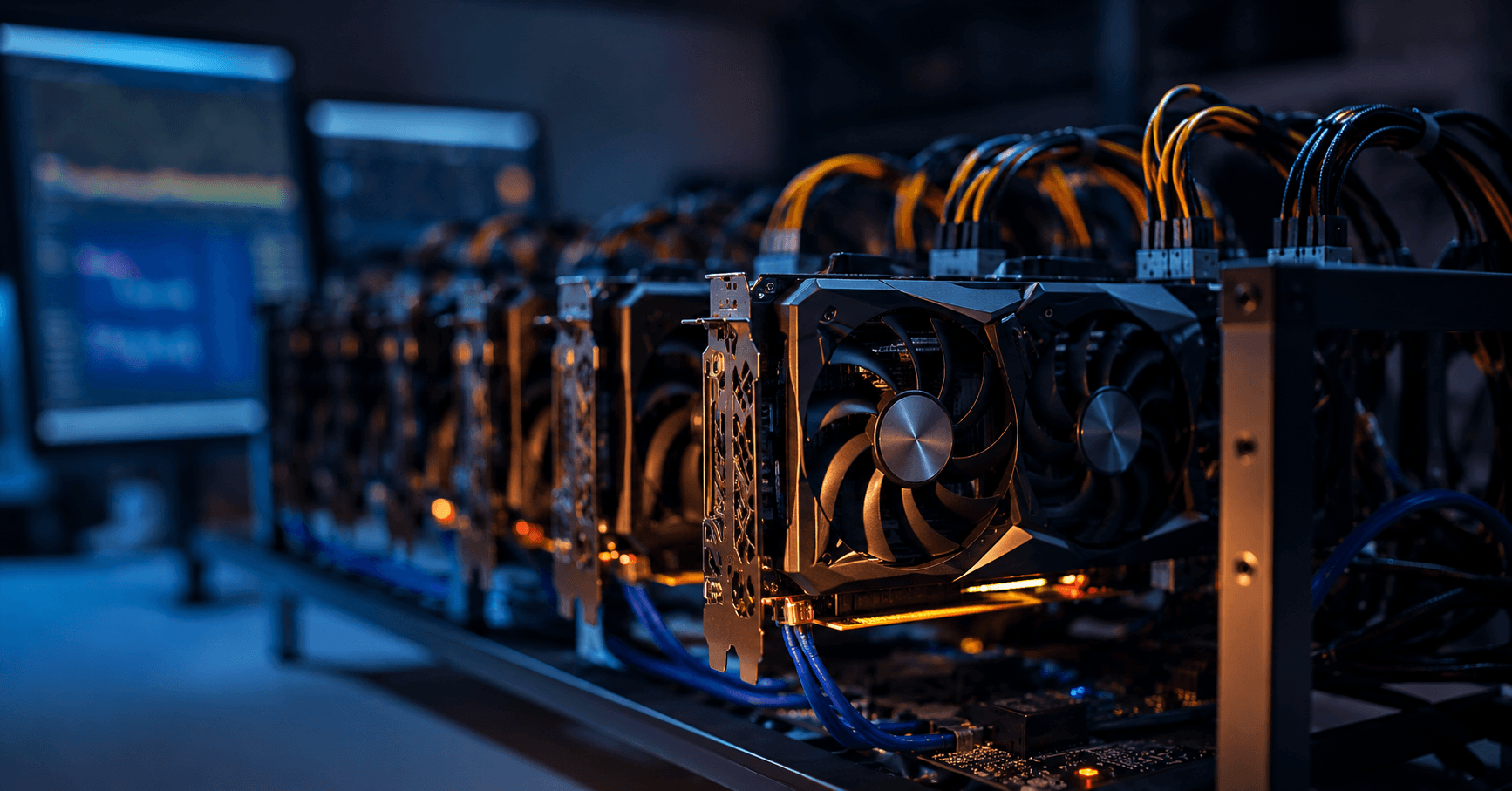
Do you have any idea about how coins are issued or how transactions are verified in the blockchain? If yes, then you are right, because all this is done with the help of crypto mining software. Crypto mining software helps connect the hardware of your computer with the blockchain network in order to solve the difficult math equations required for verification. Every transaction and coin that gets verified involves the use of software behind it.
Regardless of whether you are a beginner with an interest in finding out how the system works or a person looking into the possibilities of earning some digital currency, you will need to know everything there is to know about this particular software before you can make any sensible decisions. In this particular blog post, we will look into the mining procedure, various types of mining software, popular and alternative solutions.
What Is Crypto Mining Software?
If you’re asking what is crypto mining software, the simplest answer is that it’s a program that enables computer hardware, whether a CPU, GPU, or specialized ASIC device, to participate in a blockchain network’s mining process.
It communicates with the blockchain, receives new blocks of transaction data, and instructs your hardware to perform the calculations needed to verify those transactions. Without this software, even the most powerful mining hardware would be unable to connect to a network or contribute to the mining process.
In other words, the software acts as the interpreter between your physical hardware and the blockchain’s programming language. Your hardware supplies the power, but it doesn’t know anything about the blockchain or its language; it is the software that connects the two by translating the output of your hardware into something the network understands.
All mining programs, in addition to the above, also perform important functions such as temperature checks of the hardware, power consumption control, mining pool connection, and monitoring of earnings. There are even programs that can automatically turn off the hardware in case of overheating to prevent irreversible damage. The most popular among these are CGMiner, BFGMiner, and NiceHash.
| Software | Best For | Hardware Type | Key Feature |
| CGMiner | Advanced users | ASIC, FPGA, GPU | Command-line control, overclocking |
| BFGMiner | Bitcoin-focused mining | ASIC, FPGA | Dynamic clocking, pool switching |
| NiceHash | Beginners | CPU, GPU | Simple interface, auto-optimization |
Selecting among these tools depends largely on the user’s experience and objectives. Novice users usually go for software that provides a GUI and automatic configurations, whereas experienced users use command-line utilities for better customization and control over the performance of their hardware.
How Crypto Mining Software Works
Understanding how crypto mining software works requires a basic grasp of the mining process itself. At a high level, mining is a competition. Thousands of computers race to solve a mathematical puzzle, and whoever solves it first gets to add the next block of transactions to the blockchain and claim the reward. Here’s a simplified breakdown of what happens behind the scenes:
- Connecting to the network:The software links your hardware to the blockchain network and, in most cases, a mining pool where multiple miners combine computing power to increase their chances of success.
- Receiving transaction data:The network sends unconfirmed transactions that need to be bundled into a new block before they can be considered final.
- Solving the puzzle:Your hardware, guided by the software, races to solve a cryptographic puzzle (proof-of-work) by generating a valid hash value through trial and error.
- Validating and adding the block:Once solved, the block is broadcast to the network for verification, completing a cycle of blockchain transaction validation.
- Earning rewards:Successful miners receive newly minted coins and transaction fees as a reward for their computational effort.
This process repeats continuously, with difficulty levels adjusting based on the total computing power on the network. As more miners join and hardware becomes more powerful, the puzzles automatically become harder, keeping the average time to solve each block relatively consistent. This self-adjusting mechanism is what keeps blockchains like Bitcoin producing new blocks at a steady, predictable pace, regardless of how many people are mining at any given time.
The Role of Cryptocurrency Mining Software in Blockchain Validation
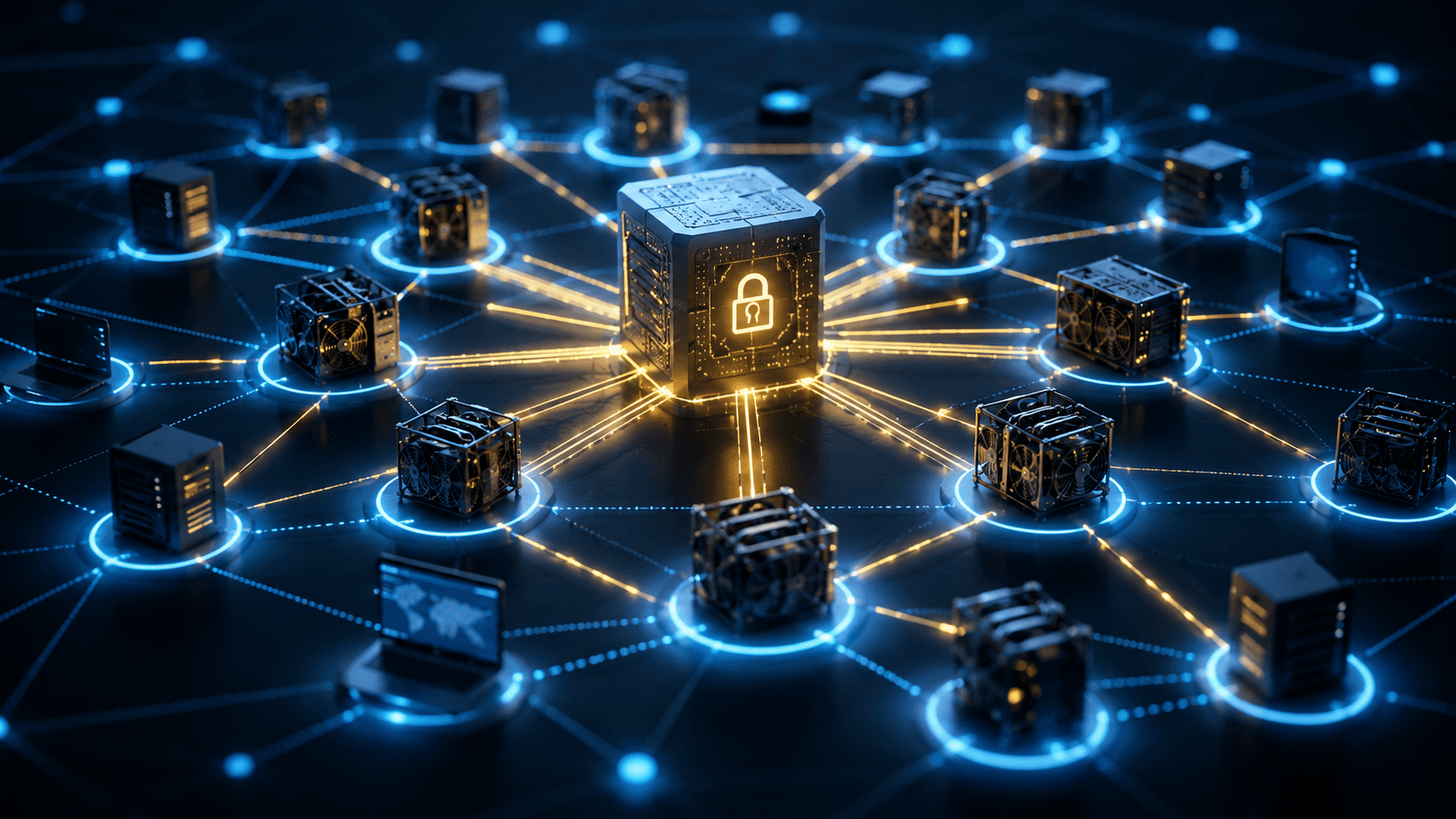
Cryptocurrency mining software isn’t just about earning rewards. It’s fundamental to keeping decentralized networks secure and trustworthy. By distributing the validation process across thousands of independent miners, blockchains avoid relying on a single central authority, such as a bank or government, to confirm transactions.
This decentralized verification system is what makes cryptocurrencies resistant to fraud and double-spending, reinforcing the integrity of every transaction recorded on the chain.
Because so many independent participants must agree on the validity of each block, altering past records would require controlling a majority of the network’s total computing power, an effort that becomes more difficult and expensive as the network grows.
This is also why mining software matters beyond individual profit. Every miner running validated software contributes to the overall health, speed, and security of the network, making the entire system more resilient against attacks and manipulation.
Cloud Mining Software: An Alternative Approach
Not everyone wants to invest in expensive hardware or deal with electricity costs and maintenance. This is where cloud mining software comes in. Instead of running physical machines, users rent computing power from remote data centers through a cloud-based platform, avoiding the noise, heat, and upfront investment that traditional mining requires.
The software manages the backend connection to these rented resources, allowing participants to mine cryptocurrency without owning any equipment themselves. Contracts are usually offered in fixed terms, with providers charging a fee based on the amount of computing power, or hash rate, that a user rents.
While convenient, it’s important to research providers carefully, as returns and reliability can vary significantly. The cloud mining space has also attracted its share of unreliable operators, so checking reviews, verifying transparency around hardware locations, and understanding fee structures before committing are essential steps for anyone considering this route.
Bitcoin Mining Software: A Closer Look
Since Bitcoin remains the most well-known cryptocurrency, Bitcoin mining software deserves special mention. Programs like CGMiner and BFGMiner are specifically optimized for Bitcoin’s SHA-256 algorithm and are typically used alongside ASIC miners for maximum efficiency, since general-purpose hardware simply cannot compete at Bitcoin’s current difficulty level.
These tools offer features such as pool switching, overclocking controls, and detailed performance statistics, helping miners fine-tune their setups for better output and profitability.
Many also support remote monitoring, allowing miners to check hardware performance and earnings from a phone or another device without being physically present at the mining site.
Because Bitcoin mining has become so competitive, software efficiency plays a major role in profitability. Even small improvements in how quickly software can process hash calculations or switch between mining pools can translate into meaningfully higher earnings over time.
| Approach | Setup Cost | Hardware Needed | Best For |
| Traditional Mining | High | Yes, physical rig | Long-term, hands-on miners |
| Cloud Mining | Low to moderate | None | Beginners, low-maintenance mining |
| Bitcoin-Specific Mining | High | Yes, ASIC required | Dedicated Bitcoin miners |
Conclusion
Crypto mining software plays a vital role in bridging computer hardware with blockchain networks, enabling the validation of transactions and the creation of new coins. From understanding the basic mechanics of how mining programs operate to exploring alternatives like cloud-based mining, it’s clear that this technology is central to how decentralized currencies function.
Whether you’re drawn to traditional setups using dedicated mining rigs or prefer the flexibility of renting computing power remotely, choosing the right software depends on your goals, budget, and technical comfort level. As blockchain technology continues to evolve, staying informed about these tools will help you navigate the mining landscape more confidently and make smarter decisions about your involvement in the crypto ecosystem.
Frequently Asked Questions
1. Is crypto mining software free to use?
Ans- A lot of mining software is available free and is open source, like CGMiner and BFGMiner. On other platforms like cloud mining, there is usually a cost involved or you have to lease the computing power.
2. Can I mine cryptocurrency using just my laptop?
Ans- Yes, technically speaking, but hardly profitable. In today’s blockchain technology, particularly Bitcoin mining, specialized hardware is a must, so mining using a laptop/desktop is practically unfeasible unless you’re doing it purely for educational purposes.
3. Is cloud mining safe?
Ans- If cloud mining is conducted using a good, honest service provider, then it is a secure process; however, there have been instances where scams and dishonest companies were also found operating within this industry.
4. Do I need technical knowledge to use mining software?
Ans- Software such as NiceHash is meant for beginners and hence is easy to use. On the other hand, CGMiner provides more control but is harder to learn than the previous one.
5. Why does mining difficulty keep changing?
Ans- The mining difficulty will adjust automatically based on the sum of computing power that connects to the network to ensure that the time taken to mine blocks remains the same.